Planning to visit, work, or live in Canada? Understanding when you need a medical examination can save you time and prevent delays in your visa application. This guide explains everything you need to know about the Canada visa medical exam process.
Do You Actually Need a Medical Exam?
The answer depends on three main factors: how long you’re staying, where you’ve recently traveled, and what type of work you’ll be doing in Canada.
Short Visits (Under 6 Months)
Most visitors staying less than six months don’t need a medical exam. You can simply apply for your visa without this extra step.
However, you’ll need an exam even for short stays if you plan to work in jobs involving close contact with people. This includes healthcare workers, teachers, daycare staff, home care providers, and agricultural workers who recently lived in certain countries.
Longer Stays (Over 6 Months)
You must complete a medical exam if you’re staying more than six months and any of these apply to you:
You lived or traveled in specific countries for six consecutive months or more within the past year. Canada maintains a list of these territories based on health screening requirements.
You’re coming to work in public health-sensitive jobs like healthcare, education, or childcare settings.
You’re applying for the parent and grandparent super visa, which allows extended family visits up to five years.
Permanent Residence Applications
Everyone applying to become a permanent resident needs a medical exam. This includes your family members, even if they’re not moving to Canada with you.
Starting August 2025, Express Entry applicants must complete their medical exam before submitting their application. Other permanent residence pathways require the exam after you apply, when immigration officials send you instructions.
Understanding the Two Types of Medical Exams
Canada uses two exam formats depending on your situation.
Standard Medical Exam
This is the complete health assessment most applicants receive. The standard exam includes a physical examination, medical history review, chest X-rays (for those 11 years and older), blood tests, and urine tests.
Streamlined Medical Exam
This simplified version is only requested during urgent situations like humanitarian crises. You cannot choose which exam type you get—immigration officials will specify what you need based on your circumstances.
Finding the Right Doctor
You cannot use your regular family doctor for this exam. Canada requires approved panel physicians who understand immigration health requirements and follow specific protocols.
These panel physicians are located worldwide, making it convenient to complete your exam in your home country. Visit the official immigration website to find approved doctors in your area.
The panel physician conducts the exam and sends results directly to immigration authorities. They don’t make the final decision about your medical admissibility—that decision comes from Canadian immigration officials.
Timing Your Medical Exam
You have two options for when to complete your exam, depending on your application type.
Before You Apply (Upfront Medical Exam)
You can get an upfront exam if you’re applying to visit, work, or study in Canada. Contact a panel physician directly to schedule your appointment.
Getting your exam done early can speed up your application processing since results are already on file when you submit your paperwork.
After You Apply
For most permanent residence applications and some temporary visas, immigration officials will send you instructions after reviewing your initial application. You typically have 30 days to complete your exam once you receive these instructions.
Don’t schedule your exam before getting official instructions unless you’re doing an upfront exam—this ensures your results are processed correctly with your application.
Recent Policy Changes You Should Know
Canadian immigration extended a temporary policy until October 2029. If you’re already in Canada and completed an immigration medical exam within the past five years, you may be exempt from doing another one.
When applying, include your previous IME number (immigration medical exam identifier) from your earlier exam. Immigration officials will review whether your previous results are still valid.
Express Entry applicants now face a major change. Beginning in August 2025, you must complete your medical exam before submitting your permanent residence application. This represents a significant shift from the previous process where exams happened after application submission.
What to Bring to Your Appointment
Proper preparation ensures a smooth exam experience without delays.
Essential Documents
Bring your passport as your primary identification. While other government-issued ID like national identity cards or driver’s licenses from specific countries are accepted, your passport is strongly recommended.
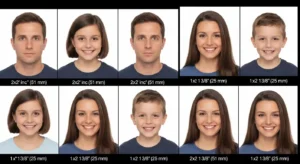
If the panel physician doesn’t use the electronic medical system (eMedical), you’ll need four recent passport-style photographs.
Children under 18 can present their original birth certificate as identification.
Medical Information
Gather any medical reports or test results for previous or existing health conditions. This helps the physician understand your medical history and can prevent processing delays.
List all medications you’re currently taking, including dosages. This information is crucial for the medical assessment.
If you wear glasses or contact lenses, bring them to your appointment—vision screening is part of the physical exam.
Vaccination Records
While not mandatory, bringing proof of previous vaccinations is encouraged. The panel physician may offer certain vaccines during your visit, and having your vaccination history helps them determine what you might need.
Vaccines include standard immunizations like measles, mumps, rubella, polio, tetanus, hepatitis B, and COVID-19. If you consent, the physician will record your vaccination history and share it with immigration authorities.
The Medical Exam Experience
Understanding what happens during your appointment can ease any anxiety about the process.
Identity Verification and Medical History
When you arrive, clinic staff will verify your identity using your passport or other approved documents. They’ll take your photograph for official records.
The physician will review your medical history with you, asking about previous illnesses, surgeries, chronic conditions, and current medications. Being honest and thorough during this discussion is critical—withholding information can delay your application processing.
Physical Examination
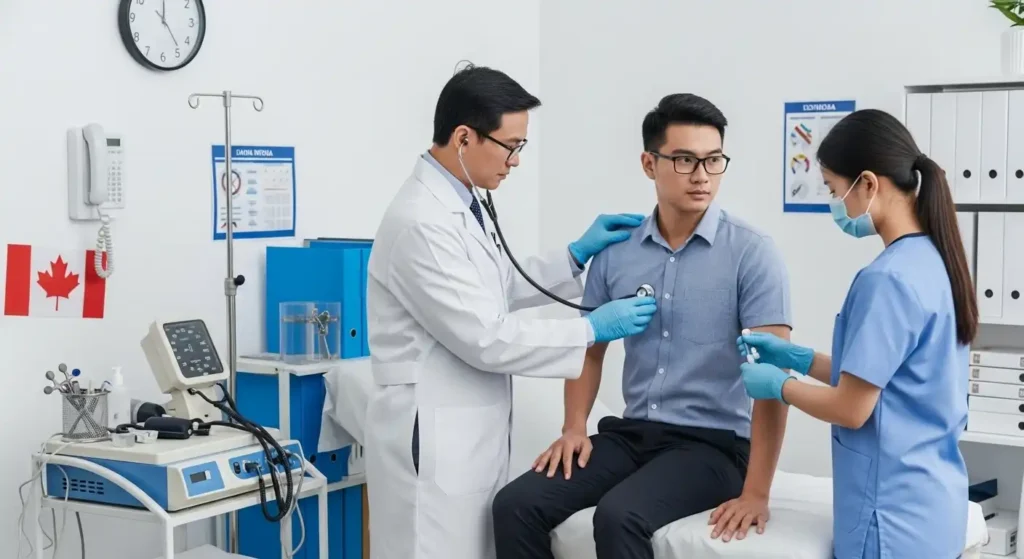
You’ll undergo a comprehensive physical exam. The doctor will check your vision, hearing, heart, lungs, blood pressure, and overall physical condition.
The examination does not include genital or rectal checks—these are never required for Canadian immigration medical exams.
For female applicants, breast examination may be necessary in certain cases. If required, the physician will explain why and how the examination will be conducted. You have the right to request a chaperone at any time during your exam.
Diagnostic Tests
Based on your age, you’ll have specific tests:
Ages 11 and older: Chest X-ray to screen for tuberculosis and other lung conditions.
Ages 15 and older: Blood tests to check for syphilis and HIV.
Ages 5 and older: Urine tests to screen for kidney disease and other conditions.
Pregnant women typically postpone X-rays until after delivery to protect the developing baby, though this may extend processing times.
If your initial tests show any concerns, the panel physician may refer you to specialists for additional testing. Complete these follow-up appointments quickly to avoid delays.
After Your Exam
The panel physician sends your results electronically to Canadian immigration authorities. You’ll receive a document confirming you completed your medical exam—keep this as proof for your records.
Results typically take 3-5 business days to upload to immigration systems, though processing times vary. Don’t request updates from the panel physician about your results—immigration officials handle all decisions about medical admissibility.
Cost of the Medical Exam
Medical examination fees are not included in your visa application costs. You pay these directly to the panel physician when you attend your appointment.
Typical costs range from 150 to 280 Canadian dollars, though exact fees vary by country, physician, and required tests. This covers the physical examination, necessary X-rays, and laboratory tests. it comes in Pkr 30500 Rs appr.
You’ll pay extra if you need specialist consultations or additional tests beyond the standard screening.
If you choose to receive vaccines offered by the panel physician, those may cost extra depending on the physician’s fee structure and local health policies.
Refugees and asylum seekers may qualify for fee exemptions covering both the medical exam and vaccines. Check with your panel physician about available exemptions.
If immigration officials refuse your visa application after you’ve completed the medical exam, these fees are not refundable.
Understanding Medical Inadmissibility
Canada may refuse your visa application on medical grounds in specific situations. This doesn’t mean you have no options—it means you need to address the concerns immigration officials have identified.
Why Applications Are Refused on Medical Grounds
Two main reasons can make someone medically inadmissible:
Public health or safety risk: Your condition could endanger other Canadians through contagion or safety concerns.
Excessive demand on health services: Your condition might require extensive, costly medical care or social services that would burden Canada’s publicly funded healthcare system.
Conditions that commonly raise concerns include active tuberculosis, untreated syphilis, certain mental health conditions that pose safety risks, and chronic illnesses requiring ongoing expensive treatment.
Important Exception for Family Sponsorship
If you’re being sponsored by a family member in Canada (spouse, partner, parent, or grandparent), the excessive demand factor doesn’t apply. Your application cannot be refused solely because you need extensive health services.
However, you can still be refused if your condition poses a danger to public health or safety, even in family sponsorship cases.
Responding to Concerns
If immigration officials identify potential medical inadmissibility, they’ll send you a Procedural Fairness Letter. This gives you an opportunity to respond—typically within 7 to 30 days.
Your response should include updated medical information, treatment plans showing your condition is managed, evidence that costs won’t be excessive, or documentation that you have private insurance or resources to cover your healthcare needs.
Special Situations and Exceptions
Unable to Complete Your Exam
Sometimes circumstances prevent you from completing a medical exam. Perhaps no panel physician practices in your region, or exceptional circumstances make the exam impossible right now.
If this happens, submit a detailed letter explaining why you cannot meet this requirement. Immigration officials will review your situation and provide guidance on next steps.
Contact immigration authorities through their web form or call center with your application details when requesting an exception.
Previous Medical Exam Results
If you completed an immigration medical exam within the past five years for another Canadian visa application, you may not need a new exam. Include your previous IME number or unique medical identifier when submitting your current application.
Immigration officials will determine whether your previous results are still valid or if you need a new exam. Medical exam results are typically valid for 12 months from the exam date.
Family Members Not Coming to Canada
Even if your spouse, partner, or children aren’t moving to Canada with you, they must still complete medical exams as part of your permanent residence application.
This requirement ensures all family members are documented and maintains your future ability to sponsor them if circumstances change.
In rare cases, non-accompanying family members who refuse or cannot complete a medical exam may receive an exemption, but this eliminates their eligibility for future family sponsorship.
Privacy and Rights During Your Exam
You have important rights throughout the medical examination process.
You can request a chaperone at any time during your appointment. If you feel uncomfortable with any part of the exam, ask the physician to stop and express your concerns.
Your medical records become the property of Canadian immigration authorities after the exam. If you want copies of your results, request them from the panel physician during your visit.
If you’re unsatisfied with how the panel physician conducted your exam, you can provide feedback through the official immigration feedback system.
After Your Medical Exam: What Happens Next
Once the panel physician submits your results, immigration officials review them as part of your overall application assessment.
If your results are clear and show no health concerns, your application continues processing through the regular channels.
If officials identify any medical issues requiring clarification, they’ll contact you in writing. You may need additional tests, specialist consultations, or further documentation.
For temporary resident applications (visitor, work, or study visas), medical results typically process within one month.
For permanent residence applications, expect medical review to take up to three months as part of the comprehensive application assessment.
Remember that your medical exam is just one part of your visa application. Immigration officials also review your background, financial situation, travel history, and other factors before making a final decision.
Key Takeaways for a Smooth Medical Exam Process
Start by determining whether you actually need a medical exam based on your trip length, recent travel history, and planned activities in Canada.
If you need an exam, locate an approved panel physician early and schedule your appointment well before any deadlines.
Gather all required documents, medical records, and vaccination proof before your appointment to avoid multiple visits.
Be completely honest during your medical history interview—withholding information only causes delays and complications.
Keep your proof of medical exam document safe with your other immigration paperwork.
Follow any instructions for additional testing or specialist consultations immediately to prevent application delays.
For permanent residence applicants, remember that medical results are valid for 12 months, so plan your application timeline accordingly.
Understanding the medical examination requirement removes uncertainty from your Canada visa journey. With proper preparation and timely action, the medical exam becomes a straightforward step toward your Canadian adventure rather than a stressful obstacle.