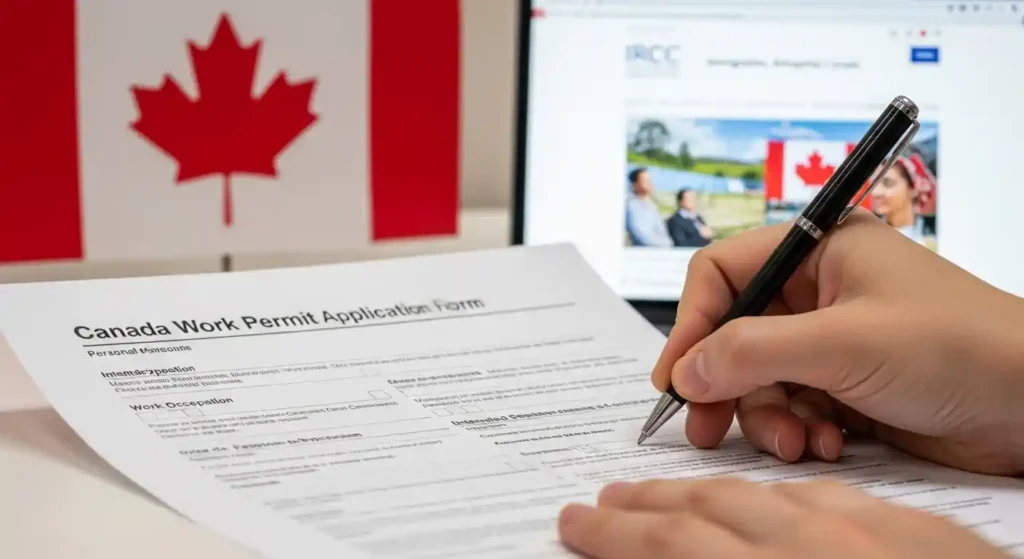
Canada is a popular destination for Pakistani professionals seeking international work opportunities. With a robust labor market, strong labor rights, and a multicultural environment, Canada issues over 500,000 work permits annually.
If you’re planning to work in Canada temporarily, or even settle permanently, this guide will walk you through the essentials, from types of work visas to eligibility, documents, costs, and common interview questions.
What is a Canada Work Visa?
A Canadian work visa, also known as a work permit, is a legal document issued by Immigration, Refugees and Citizenship Canada (IRCC) that allows a foreign national to legally work in Canada for a specific employer, job, and time period. It is often supported by a Labour Market Impact Assessment (LMIA) unless exempted under specific programs.
A work permit is not the same as a visa. While the work permit allows you to work, a temporary resident visa (TRV) or Electronic Travel Authorization (eTA) is needed to enter Canada.
What Are the Different Types of Canada Work Visas for Pakistani Nationals?
Canada offers various types of work visas (also known as work permits), each with specific requirements. Understanding these categories will help you determine which one suits your situation.
What Are LMIA-Based Work Permits for Pakistan Nationals?
LMIA-based work permits are employer-specific permits that require the employer to obtain a Labour Market Impact Assessment (LMIA) from Employment and Social Development Canada (ESDC) before hiring a foreign worker.
- Temporary Foreign Worker Program (TFWP): For employers who need to hire foreign workers.
- Global Talent Stream: A fast-track program for tech workers and specialized occupations.
- Facilitated LMIA (Quebec): Designed for workers planning to work in Quebec.
What Are LMIA-Exempt Work Permits?
These permits allow workers to work in Canada without needing an LMIA. However, a job offer is still required.
- International Mobility Program (IMP): Covers several work permit categories exempt from LMIA, like intra-company transfers and some free trade agreements.
- Intra-Company Transfer: For employees transferring within the same company.
- CETA & NAFTA/USMCA Work Permits: For workers under international agreements like CETA (Canada-Europe) and USMCA (Canada-US-Mexico).
What Are Open Work Permits for Pakistan Nationals?
Open work permits are the most flexible option, as they don’t require a job offer and are not tied to a specific employer.
- Post-Graduation Work Permit (PGWP): For international students who have graduated from a designated learning institution in Canada.
- Spousal Open Work Permit: For spouses of work or study permit holders.
- International Experience Canada (Working Holiday): For young people from certain countries, offering temporary work opportunities in Canada.
- Bridging Open Work Permit (BOWP): For applicants waiting for their permanent residence application results.
What Are the Eligibility Criteria for Canada Work Visas?
To apply for a Canada work visa, you must meet specific eligibility requirements, which can vary depending on the type of work permit.
What Are the General Eligibility Requirements for a Work Permit?
- Valid Job Offer: In most cases, you need a valid job offer from a Canadian employer.
- Proof of Qualifications: Relevant educational qualifications and work experience.
- Proof of Funds: You must show that you can support yourself and any accompanying family members while in Canada.
- Clean Criminal Record: You may need to provide a police certificate.
- Medical Examination: Some applicants must undergo a medical exam.
Are There Language and Education Requirements for Canada Work Visas?
- Language Proficiency: While not always required for a work visa, language proficiency may be evaluated in specific cases (e.g., Express Entry for permanent residency).
- Educational Requirements: You must meet the education and experience criteria of your job offer, and some permits may require specific degrees or diplomas.
What is the Step-by-Step Process for Applying for a Canada Work Visa from Pakistan?
Applying for a Canada work visa involves several steps. Here’s how you can navigate the process.
How Do I Get a Job Offer from a Canadian Employer?
The first step in applying for a Canada work visa is securing a job offer. The employer must be willing to hire you and may need to obtain an LMIA (in the case of employer-specific work permits).
What Is the Employer’s Role in the LMIA Application?
If the work permit is LMIA-based, your employer needs to apply for an LMIA to prove that no Canadian citizens or permanent residents are available to fill the role. Once approved, you can proceed with your work visa application.
What Documents Do I Need to Collect for a Canada Work Visa?
Here’s a list of essential documents required for the application:
- Valid passport
- Job offer letter
- LMIA (if applicable)
- Completed application forms
- Proof of education and work experience
- Police clearance certificate
- Medical examination results (if required)
- Proof of funds
- Biometrics (if required)
- Passport-size photographs (per IRCC specifications)
How Do I Submit My Canada Work Visa Application?
You can submit your application either online or at a Visa Application Centre (VAC) in Pakistan. Ensure that all documents are complete to avoid delays.
Do I Need Biometrics and a Medical Exam for a Canada Work Visa?
Biometrics may be required for certain applicants. Additionally, a medical exam is necessary for those who are working in health-related or safety-sensitive jobs.
Get detailed information of Medical Examination for Canada Visa
How Do I Wait for Approval After Submission?
After submitting your application, you must wait for the approval. Processing times can vary depending on the type of work visa and where you are applying.
What Common Questions Are Asked in a Canada Work Visa Interview?
Although interviews are not always required, they may be necessary in certain cases. Be prepared to answer questions like:
- Why do you want to work in Canada?
- What is your job role and the name of your employer?
- What are your qualifications?
- How long do you plan to stay in Canada?
- How will you support yourself during your stay?
- Do you intend to return to Pakistan after your work visa expires?
How Much Does a Canada Work Visa Cost?
The cost of applying for a Canada work visa varies depending on the type of permit and any additional services required.
- Employer-Specific (Closed) Work Permit: CAD $155
- Open Work Permit: CAD $255
- Biometrics Fee: CAD $85 (if applicable)
- Restoration Fee: CAD $200 (if required)
- Additional costs: Medical exams, police clearances, etc.
What Is the Processing Time for a Canada Work Visa Application?
The processing time depends on several factors, including the type of work permit and where you are applying from.
- LMIA Approval: 2–5 months (Quebec-specific programs may be faster)
- Work Permit Application: 8 to 12 weeks on average
- Biometrics & Medical: Add 1–2 weeks to the processing time
What Are the Benefits of Working in Canada for Pakistani Nationals?
Working in Canada offers several benefits that can help improve your career prospects and quality of life.
- Competitive Salaries: Foreign workers are entitled to the same wages as Canadian workers in comparable roles.
- Workplace Safety: Strong labor laws protect workers’ rights and safety.
- Family Benefits: Spouses may qualify for an open work permit, and children can attend school in Canada without a study permit.
- Path to Permanent Residency (PR): Canadian work experience is a key factor in programs like Express Entry and Provincial Nominee Programs (PNPs).
- Public Healthcare: Some provinces may extend health coverage to work permit holders.
What Is the Duration of a Canada Work Visa?
The typical duration for a Canada work visa is 1–2 years, but it depends on the job contract, LMIA, or passport expiration. You can apply for an extension as long as you do so at least 30 days before your permit expires.
Can I Get Permanent Residency After Working in Canada?
Yes, work permits can serve as a stepping stone to permanent residency. Many work visa holders use their Canadian work experience to qualify for Express Entry, PNPs, or Quebec Immigration programs.
How Go Foreign Canada Work Visa Consultancy Can Help You
Navigating the Canada work visa process can be overwhelming, especially with all the documentation, deadlines, and requirements. At Go Foreign, we specialize in providing expert Canada work visa consultancy services to help make the process smooth and hassle-free for Pakistani applicants. Our team of experienced consultants can guide you through every step, from securing a job offer to handling paperwork and even ensuring your visa application is complete and accurate.
Why Choose Us?
- Expertise in Canadian immigration and work visa processes
- Personalized services tailored to your specific needs
- High success rates and fast processing times
- Professional guidance through every step of the application
FAQs
Is IELTS required for a Canada Work Visa?
IELTS is generally not required for a work permit, unless your job offer specifies a language requirement or you’re applying under a program that evaluates language (e.g., Express Entry later on).
Can I apply for a Canada Work Visa without a Job Offer?
Yes, in certain cases like:
- Post-Graduation Work Permit (PGWP)
- Spouse of a worker/student (Open Work Permit)
- International Experience Canada (Working Holiday)
- Bridging Open Work Permit (for PR applicants)
Which Companies in Canada Sponsor Foreign Workers?
Employers don’t “sponsor” per se but can help you get an LMIA. Some frequently hiring employers include:
- Amazon Canada
- Magna International
- SNC-Lavalin
- Shoppers Drug Mart
- Tim Hortons (Franchise)
- Canadian Tire
- Loblaw Companies Ltd.
- RBC / TD / Scotiabank (for tech roles)
Always check if the employer is listed on Canada’s list of eligible employers for foreign workers.