Applying for a US study visa from Pakistan can feel complicated, especially for first-time applicants. The F-1 student visa allows Pakistani students to study full-time at accredited US universities, colleges, and research institutions.
This guide explains the complete US student visa process for Pakistani students in simple and practical terms. You will learn about eligibility, required documents, visa fees, SEVIS and DS-160 forms, embassy interviews, and common mistakes to avoid in 2025.
What are the Types of US Student Visas?
| Visa Type | Purpose | Duration | Work Permission |
| F-1 | Academic or English language studies | Duration of study + 60-day grace period | On-campus (20 hrs/week); OPT/CPT after 1 year |
| M-1 | Vocational or technical training | Study period + 30-day grace period | Practical training after completion |
| J-1 | Exchange and cultural programs | Duration of program | May work if sponsored by an authorized institution |
What are the Requirements for a USA Study Visa from Pakistan?
Documents required for a USA student visa are the official papers that prove your identity, admission, finances, academic history, and ties to Pakistan for study in the United States.
Core documents required for USA student visa from Pakistan:
- Valid passport: A machine-readable Pakistani passport valid for at least 6 months beyond your intended stay in the United States, plus previous passports if available.
- National ID and family records: A clear copy of your CNIC and a Family Registration Certificate (FRC) from NADRA that lists parents, spouse, and children where relevant.
- DS-160 confirmation page: The completed online nonimmigrant visa application (Form DS-160) confirmation page with barcode printed for presentation at the interview.
- MRV visa fee receipt: Original machine-readable visa (MRV) fee payment receipt for your student visa category, paid in local currency through approved channels in Pakistan.
- SEVIS I-901 fee receipt: I-901 SEVIS fee payment receipt for F-1, M-1, or J-1 visa categories, printed from the SEVIS payment portal.
- Visa interview appointment confirmation: Confirmation printout or email showing the scheduled student visa interview at the U.S. Embassy in Islamabad or the U.S. Consulate General in Karachi on a specific date and time.
- Form I-20 or DS-2019: Original Form I-20 (for F-1 or M-1) or DS-2019 (for J-1) issued by your SEVP-approved school, signed by the Designated School Official and signed by you.
- Official admission letter: The admission or offer letter from the U.S. institution confirming your program, start date, and any funding granted.
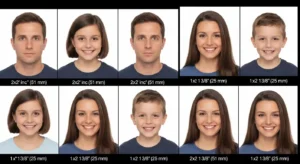
- Recent visa-compatible photograph: One 2×2 inch (51 x 51 mm) color photo with white background, taken within the last 6 months, matching U.S. visa photo specifications.
- Personal bank statements: Original personal bank statements for at least the last 3–6 months that show sufficient liquid funds for tuition, fees, and living expenses for at least the first year of study.
- Sponsor’s financial documents: Sponsor’s recent bank statements, fixed deposit certificates, and other liquid-asset proofs, plus documents that show the sponsor’s income source such as salary slips, tax returns, or business records.
- Affidavit or letter of sponsorship: A signed sponsorship letter or affidavit that states the sponsor’s relationship to you, level of financial support, and confirmation of responsibility for your study and living expenses.
- Scholarship or funding letters: Official scholarship, assistantship, or financial-aid award letters from the U.S. school or any external funding body that contributes to your study costs.
- Educational certificates and degrees: Original certificates and mark sheets for Matric or O-Level, Intermediate or A-Level, bachelor’s degree, and higher qualifications relevant to the program.
- Official academic transcripts: Sealed or stamped transcripts from schools, colleges, and universities that show subjects studied and grades received.
- Standardized test score reports: Test reports such as SAT, ACT, GRE, or GMAT where these exams appear in your admission requirements or scholarship conditions.
- English-language test scores: Valid IELTS or TOEFL score reports that match or exceed the minimum level required by your program or institution.
- Travel history evidence: Summary of international travel for the last 5–10 years where available, with old passports, previous visas, and any U.S. entry records if you visited the United States before.
- Family information list: Written list of siblings and children with full names, dates of birth, and locations, matching the information entered in DS-160 and FRC.
- Curriculum vitae or résumé: A CV or résumé that outlines your education, employment, internships, and relevant activities, in line with information given in the DS-160 form.
- Proof of employment or business ties: Job offer letters, employment letters, pay slips, employer NOC, or business registration and tax documents where you have ongoing work or business in Pakistan.
- Property and asset documents: Property ownership papers, lease agreements, or other asset documents if you rely on rental income or property as part of your financial and home-country ties.
- Police Character Certificate: A recent police clearance certificate from the relevant police office in your area that confirms no outstanding criminal charges in Pakistan.
- Court or legal documents (if applicable): Certified copies of any court judgments, arrest records, or legal documents if you ever faced charges, including documents that show case outcomes.
- Previous U.S. visa and refusal records: Copies of any current or expired U.S. visas, and any refusal letters or notes for past U.S. or other country visa denials where those events occurred.
- Contact and social-media information: A list of phone numbers, email addresses, and social-media handles used during the last 5 years in line with DS-160 security questions.
- Round-trip or onward travel reservation: A flight itinerary or round-trip booking that matches your program start date and indicates an intended return to Pakistan after study or after any training period that applies.
- Dependent documents for F-2 or M-2 family members: Marriage certificate for spouse, birth certificates for children, dependent I-20 or DS-2019 forms, and proof of relationship that matches passports and FRC records.
- Student status documents inside Pakistan: Current student ID card, bonafide letter, or leave letter from your current school, college, or university if you remain enrolled there before departure.
Valid passport
A valid passport proves your identity and nationality for your student visa case in the United States. The passport has a machine-readable zone, a clear photo page, and no serious physical damage. Validity extends at least six months beyond your intended stay. Old passports travel to the interview too, because previous visas and travel stamps give important history. Name spellings, dates of birth, and passport numbers match every form and school record in your application.
National ID and family records
National ID and family records confirm your identity inside Pakistan and support your family information. CNIC or Smart CNIC copies remain clear, current, and readable. A Family Registration Certificate from NADRA lists parents, spouse, and children with correct spellings. Dates of birth and addresses align with DS-160 answers. These records support ties to home, because they link you with your immediate family network and regular residence inside the country.
DS-160 confirmation page
The DS-160 confirmation page is the proof that your online nonimmigrant visa application exists in the system. The page displays your photo, application ID, and barcode. All personal details, education entries, security answers, and travel plans inside the DS-160 match your supporting documents. You print this page on A4 paper without scaling. The confirmation page travels to biometrics and interview, because staff scan the barcode to open your student application.
MRV visa fee receipt
The MRV visa fee receipt verifies that you paid the nonrefundable visa processing charge. Bank or payment center staff issue this receipt with a unique number after payment in local currency. The category on the receipt matches the F-1 or M-1 visa type. The name, passport number, and amount align with your DS-160 information. The receipt appears in good condition at the appointment, because staff request it before interview registration and security checks.
SEVIS I-901 fee receipt
The SEVIS I-901 fee receipt confirms activation of your SEVIS record before interview. The receipt lists your SEVIS ID, name, and date of payment. The SEVIS ID on the receipt matches the ID on your Form I-20 or DS-2019. Payment happens before the visa appointment to avoid processing delays. A printed copy from the official website remains inside your document file. Officers view this receipt while confirming your status as a tracked international student.
Visa interview appointment confirmation
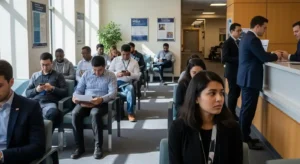
The visa interview appointment confirmation shows your scheduled date, time, and location for the student visa interview. The confirmation page reflects the correct category, usually F-1 or M-1. The passport number, profile ID, and name match your DS-160. You print this confirmation and keep an electronic version on your phone. Security staff check this page at the entrance, and interview staff reference it when they call your name in the waiting area.
Form I-20 or DS-2019
Form I-20 or DS-2019 is the central status document for your student or exchange visitor visa. The form lists your program, level of study, start date, end date, and estimated costs. The SEVIS ID, school code, and personal details match your passport. The Designated School Official signs the document with a recent date. You sign the student section in ink. Officers read funding details from this form while they evaluate your financial readiness.
Official admission letter
The official admission letter proves that a SEVP-approved institution accepted you. The letter shows your name, program title, term of admission, and any conditions such as prerequisite courses. Scholarship amounts or assistantships appear where the school grants funding. The letterhead, contact details, and signatures identify the institution clearly. Program details and start dates match the information on Form I-20. Officers treat this letter as direct evidence that a genuine academic place exists.
Recent visa-compatible photograph
A recent visa-compatible photograph supports identity verification during biometrics and interview. The photo size is 2×2 inches, with a white background and full face visible. The expression remains neutral, with both eyes open. Head coverings follow religious norms while leaving the face fully clear. The photo age stays under six months, which reflects your current appearance. The same photograph style appears on the DS-160 upload to keep image records consistent.
Personal bank statements
Personal bank statements show your own liquid funds for study, housing, and daily expenses. Statements cover at least three to six recent months from a regulated bank. Account holder name and number match your documents. Large recent deposits include a clear source explanation. Bank account must contain at least $10,000, or 1.5 times the amount stated on your I-20 form. Regular inflows, stable balances, and clear transaction histories support a strong financial profile.
Sponsor’s financial documents
Sponsor’s financial documents prove that a parent, relative, or other supporter has adequate resources. Recent bank statements show stable balances across several months, not sudden unexplained deposits. Fixed deposit certificates, savings accounts, and investment accounts display maturity values. Salary slips, business registrations, and tax returns describe income sources. Sponsor details and relationship match DS-160 and sponsorship letter information. Financial strength across these documents signals reliable support through tuition payments and living costs.
Affidavit or letter of sponsorship
An affidavit or letter of sponsorship records a formal promise of financial support. The letter explains the sponsor’s relationship to you, total pledged amount, and duration of support. Names, CNIC numbers, and contact details match other documents. The letter appears on plain paper or letterhead, with signatures in ink. Sometimes a notary stamp strengthens credibility. Officers read this affidavit together with bank evidence to confirm genuine responsibility for your education abroad.
Scholarship or funding letters
Scholarship or funding letters describe grants, stipends, or waivers that reduce your financial burden. The letters come directly from the university, government agency, or recognized sponsor. Exact amounts, covered expenses, and duration appear clearly, such as tuition waivers or monthly stipends. Names and program details match your I-20 information. These letters ease the required personal or sponsor funding. Officers read them to adjust the remaining financial gap for your visa assessment.
Educational certificates and degrees
Educational certificates and degrees document your academic preparation for the chosen program. Original Matric or O-Level, Intermediate or A-Level, and higher degree certificates travel to the interview. Names, institutional seals, and issue dates remain clear. Subject combinations and grades align with admission requirements for your course. Any professional diplomas or technical certificates support field-related study plans. Consistency between these certificates and your DS-160 education history strengthens trust in your past academic claims.
Official academic transcripts
Official academic transcripts present detailed records of your subjects and grades. Schools and universities issue these documents on letterhead, sometimes in sealed envelopes. Course titles, credit hours, and graded results appear term by term. Cumulative marks or GPA reflect your overall performance. Transcripts match the institutions listed in your education history and resume. Officers compare these transcripts with admission level, such as bachelor or master, to evaluate academic readiness for further study.
Standardized test score reports
Standardized test score reports document performance on exams such as SAT, ACT, GRE, or GMAT where required. Reports show section scores, composite totals, and test dates. Names and dates of birth match passport details. Scores meet or exceed the minimum thresholds stated by your institution. Printed reports sit beside unofficial copies inside your file. Officers glance at these scores mainly to confirm authenticity and consistency with the admission letter and I-20 information.
English-language test scores
English-language test scores demonstrate your ability to study in an English-medium environment. IELTS, TOEFL, or equivalent score reports list overall band scores and section results for reading, writing, listening, and speaking. Scores meet the minimum level required for your program. Test dates remain within valid time limits, usually two years. Names and personal information match your passport. Officers use these scores to check that you possess sufficient language skills for lectures and coursework.
Travel history evidence
Travel history evidence shows how you handled previous visits abroad. Old passports with exit and entry stamps reveal patterns of compliance with visa rules. Past visas from Schengen states, the United Kingdom, Gulf countries, or East Asia support a positive record. Return stamps illustrate timely departures. For previous visits to the United States, any I-94 records, study periods, or tourist stays appear consistent. Officers read this history as context for overall credibility.
Family information list
A family information list outlines your immediate family structure. Full legal names, dates of birth, occupations, and current locations appear for parents, siblings, spouse, and children. Details align with CNIC records, FRC entries, and DS-160 answers. The list signals strong home ties where close family members remain in Pakistan. Accurate information here reduces confusion during security screening. Officers compare your narrative during interview with this written structure to detect possible discrepancies.
Curriculum vitae or résumé
A curriculum vitae or résumé summarizes your education, experience, and skills in one document. The CV lists institutions, degrees, and dates that match transcripts and certificates. Employment entries show positions, companies, and timelines without unexplained gaps. Internships, projects, and relevant achievements connect logically with your chosen field of study. Contact details sync with DS-160 answers. Officers glance at this résumé to understand your academic trajectory and long-term career intentions linked with the program.
Proof of employment or business ties
Proof of employment or business ties establishes economic and professional roots at home. Job offer letters, employment verification letters, and recent pay slips describe your role and income. Employer NOC confirms permission for study leave where applicable. Business registration certificates, tax filings, and bank statements document ongoing enterprises. These records show that your life in Pakistan includes responsibilities and income sources. Officers read them as clear signals of intent to return after study.
Property and asset documents
Property and asset documents highlight financial strength and stable home ties. Property ownership papers show land, houses, or flats registered under your or sponsor names. Valuation reports or tax receipts support realistic asset values. Rental agreements reveal steady income streams. Vehicle registrations, investment portfolios, or retirement funds contribute further proof. These assets do not replace liquid funds for tuition, yet they demonstrate long-term security. Officers weigh them while assessing broader economic background.
Police Character Certificate
A Police Character Certificate confirms that no recorded criminal history exists in your local jurisdiction. The certificate issues from the relevant police authority, with official stamps and signatures. Names, addresses, and CNIC numbers match other identity documents. Issue date remains recent, usually within a few months before interview. Any remarks appear clearly explained. Officers treat this certificate as reassurance that your background aligns with security standards for international students.
Court or legal documents (if applicable)
Court or legal documents explain any past arrests, charges, or convictions. Certified copies of judgments, police reports, or settlement orders provide full context. These records show charges, decisions, and final outcomes. Dates, locations, and personal details match the disclosures in your DS-160 security section. Honest disclosure reduces suspicion. Officers examine these documents carefully, so complete and organized information supports a fair evaluation of your eligibility despite previous legal complications.
Previous U.S. visa and refusal records
Previous U.S. visa and refusal records reveal how past applications ended. Old passports display earlier visa stickers, annotations, and corresponding travel stamps. Any refusal letters from prior U.S. or other country applications remain inside your file. Dates, reasons, and categories from these letters match the explanations in DS-160 answers. Transparent handling of prior refusals signals integrity. Officers judge current circumstances with these records in mind when they evaluate potential changes in your profile.
Contact and social-media information
Contact and social-media information documents your digital footprints over recent years. A list of phone numbers, email addresses, and physical addresses matches DS-160 entries. Social-media handles for major platforms align with the security questions on the form. Consistent information here simplifies background checks. You present these details confidently during interview if asked. Officers expect that names, contact points, and online identities stay stable, which supports a coherent personal history.
Round-trip or onward travel reservation
A round-trip or onward travel reservation outlines your intended movement between Pakistan and the United States. The itinerary shows a departure date that arrives before program orientation and a return or onward date after expected study completion. Airline, route, and timing appear reasonable. The reservation remains a booking, not necessarily a paid ticket, unless personal preference differs. Officers view this document as one piece of evidence that your travel plan follows your academic timeline.
Dependent documents for F-2 or M-2 family members
Dependent documents for F-2 or M-2 family members prove relationship and support for spouse or children. Marriage certificates, nikah namas, and birth certificates show legal family ties. Dependent I-20 forms list each family member with correct SEVIS IDs. Passports and CNIC copies match names and dates. Financial evidence covers living costs for every dependent. Officers want confirmation that dependents have lawful status, sufficient support, and genuine family relationships connected with your student status.
Student status documents inside Pakistan
Student status documents inside Pakistan describe your current academic position before departure. Bonafide letters from colleges or universities state that you study there or recently completed a program. Student ID cards, enrollment confirmations, and leave or gap approvals create a clear educational timeline. Dates match your transcripts and DS-160 entries. These documents prove that your move to the United States continues an existing academic path instead of an abrupt unexplained change.
How to Apply for USA Study Visa from Pakistan? Step by Step Application Process
How to apply for a USA student visa from Pakistan is a five-step process that covers choosing a SEVP-approved university, receiving your I-20, completing the DS-160, scheduling the interview, and preparing strong documents and answers for the visa appointment.
1. First choose a SEVP-approved US university and program:
Identify universities on the SEVP list that match your academic background and career plan. Focus on programs that continue your current field or create a clear, logical shift. Register for English proficiency tests and required standardized tests. Collect transcripts, certificates, recommendations, and a clear CV. Submit complete, accurate applications before each deadline.
2. Second enroll and receive your Form I-20 from the university
Accept one admission offer and follow the university’s enrollment instructions. Receive your Form I-20 with SEVIS ID, program level, start date, end date, and estimated costs. Check that your name, date of birth, and funding details match your passport and financial proofs. Sign the student section. Pay the SEVIS I-901 fee and print the payment receipt.
3. Third complete the online DS-160 visa application
Open the DS-160 form and enter personal data, travel plan, education history, work history, and security answers with full consistency. Use the same spellings and dates as your passport, I-20, and other documents. Upload a visa-compatible photo. Submit the form and print the DS-160 confirmation page with barcode. Pay the MRV visa application fee and keep the payment receipt.
4. Fourth schedule your US Embassy or Consulate interview
Create a visa appointment profile and link your DS-160 confirmation number. Select the F-1 student category. Choose the nearest US Embassy or Consulate in Pakistan in Islamabad, Karachi, Lahore, or Peshawar and pick available interview and biometrics dates. Enter passport details, receipt number, and contact information correctly. Print or save the appointment confirmation page for use at the entry gate and document check.
5. Fifth prepare your documents and practice for the interview
Arrange your passport, I-20, SEVIS receipt, DS-160 confirmation, MRV receipt, visa photo, academic records, test scores, and financial statements in clear order. Include proofs of family ties, property, or job prospects in Pakistan. Practice short answers about your program choice, funding source, and plans in Pakistan after graduation. Attend the interview early, answer confidently, and keep every response consistent with your documents.
How Much Does a US Student Visa Cost in Pakistan?
US student visa cost in Pakistan is the sum of the MRV application fee, the SEVIS I-901 fee, any reciprocity fee, and local service charges for each applicant type from Pakistan going to the United States.
| # | Fee type | Who pays | Amount (USD) | Approx amount (PKR*) | Key notes |
| 1 | MRV nonimmigrant visa application fee | All F-1, M-1, J-1, and their dependents F-2, M-2, J-2 | 185 | ≈ 51,800 PKR | Standard DS-160 visa application fee. Required for each visa application. Non-refundable. |
| 2 | SEVIS I-901 fee (F-1 / M-1) | Main F-1 or M-1 student only | 350 | ≈ 98,000 PKR | One-time fee per new SEVIS record. Paid before visa interview or change of status. Dependents do not pay. |
| 3 | SEVIS I-901 fee (J-1 full) | Most J-1 exchange students | 220 | ≈ 61,600 PKR | Standard SEVIS fee for J-1 exchange visitors such as interns or trainees. |
| 4 | SEVIS I-901 fee (J-1 reduced) | J-1 Au Pair, Camp Counselor, Summer Work Travel | 35 | ≈ 9,800 PKR | Reduced SEVIS fee for specific J-1 program categories. |
| 5 | SEVIS I-901 fee for dependents | F-2, M-2, J-2 dependents | 0 | 0 PKR | SEVIS fee applies only to principal F-1, M-1, J-1. Dependents stay exempt. |
| 6 | Visa issuance reciprocity fee (student classes) | F-1, F-2, M-1, M-2, J-1, J-2 with Pakistani passport | 0 | 0 PKR | Reciprocity schedule for Pakistan lists None for F, M, J classes. No extra issuance fee after approval. |
| 7 | MRV fee for certain US-government funded J-1 programs | J-1 with program serial G-1, G-2, G-3, G-7 | 0 | 0 PKR | Some US-funded exchange programs receive an MRV fee exemption. Program code on DS-2019 decides this. |
What are the USA Student Visa Interview Questions and Answers
During the visa interview, the consular officer checks your study plan, your finances, and your intention to return to Pakistan. The officer reviews your DS-160, your Form I-20, and your financial documents before or during the questions. The interview usually stays short, often only a few minutes, so every answer needs clarity, honesty, and confidence.
The consular officer mainly asks questions about:
- Why you chose this university and program
- Why you selected the United States instead of other study destinations
- How your chosen program links to your previous studies or work experience
- How you will pay for your education and living expenses
- Who is funding your education and what that person does in Pakistan
- Whether your bank account and sponsor funds cover at least the first year
- Whether you plan to return to Pakistan after graduation
- What career plan you have in Pakistan after your degree
- What family ties and property ties keep you connected to Pakistan
- What previous travel history and visas you have, including any refusals
Explain clearly:
- Your academic background and grades in key subjects
- Your future career plans in Pakistan that match your field of study
- The exact person or people funding your education and their income sources
- Your links to Pakistan, such as family, work prospects, or business plans
Short, honest answers beat memorized speeches. Speak in simple sentences. Keep facts consistent with your documents. Look at the officer, stay calm, and reply in English. The officer decides based on your credibility, your financial proof, and the logic between your past, your chosen program, and your future in Pakistan.
What are the Common Reasons for Visa Rejection (and How to Avoid Them)
Common reasons for US student visa rejection are specific problems in finances, documents, intent, and communication that push the consular officer toward a negative decision.
- Questionable travel or immigration history: Previous overstays or hidden refusals undermine trust. Declare every past visa outcome honestly and present proof of timely departures where records exist.
- Insufficient financial proof: Weak bank statements, unexplained deposits, or low balances trigger refusals. Maintain stable funds for at least twelve months and present clear, authentic statements for tuition and living costs.
- Unclear sponsor profile: Hidden income sources damage trust. Present salary slips, tax returns, business registrations, and a precise sponsorship letter that explains relationship and exact support amount.
- Inconsistent information: Differences between DS-160, I-20, bank papers, and interview answers signal risk. Use exactly the same names, dates, amounts, and study details across every document.
- Doubtful study plan: A program that does not match past studies or experience raises suspicion. Choose a course with a logical link to your background and explain that link in simple sentences.
- Weak future plans in home country: Vague answers about life after graduation harm intent. Describe clear job goals, business ideas, or family responsibilities in Pakistan that create strong reasons to return.
- Poor interview performance: Nervous body language and memorized speeches reduce credibility. Practice short answers, breathe slowly, maintain eye contact, and treat each question as a fresh conversation.
- Limited English communication: Struggling with basic questions affects the study claim. Improve speaking practice before the interview and use direct, simple English without slang.
How Can Go Foreign USA Study Visa Consultants Islamabad Help You?
Pakistani students who plan to study in the United States choose between several student visa types, so the visa type and university category stay fully aligned. Every fee payment for the US student visa remains nonrefundable, so correct amounts and correct categories matter at each step. Go Foreign guides students through this process from course selection to interview day. Our team reviews eligibility, prepares documentation, and trains you for focused embassy interviews. Many applicants secure approvals with support from Go Foreign USA Study Visa Consultants based in Islamabad, including advice on timelines and processing stages.
Go to the link or call us at 03330478050
Frequently Asked Questions
How much bank statement is required for a US student visa?
The bank statement required for a US student visa covers at least one full year of tuition, fees, and living expenses shown on your I-20. Strong cases keep a target of 1.5 times that I-20 amount in liquid accounts. Consistent balances across three to six months with clear income sources create solid financial credibility for the USA study visa from Pakistan.
Is IELTS required for USA student visa?
No, IELTS is not required by law for a USA student visa from Pakistan. The key requirement is admission to a SEVP-approved institution, and each university sets its own English rules. Many programs accept TOEFL, PTE, Duolingo, in-house tests, or English-medium schooling. If the university issues an I-20 and you speak clear English, visa language expectations stay satisfied.
Can I get USA study visa without IELTS from Pakistan?
Yes, you can get a USA study visa without IELTS from Pakistan when your university accepts another English proof and issues your I-20. TOEFL, PTE, Duolingo, internal tests, or strong English-medium history work as alternatives. The consular officer listens to your spoken English. Confident communication during the visa interview supports the academic English evidence inside your documents.
Is gap acceptable for a USA study visa?
Yes, gap is acceptable for a USA study visa when you explain it with clear documents. Work experience, business activity, exam preparation, family responsibilities, or health treatment count as valid reasons. Appointment letters, payslips, registrations, and reports prove each period. A longer study gap needs a logical new program that connects past activities with future goals in Pakistan.
Can I get USA study visa after 10th?
Yes, you can get a USA study visa after 10th by joining a US high school or secondary program under F-1 status. Schools in grades nine to twelve enrol international students for full-time study. Guardianship, accommodation, and welfare arrangements support younger students. Financial proof, English ability, and a clear plan to continue education shape the decision for Pakistani applicants.
What is the USA student visa processing time from Pakistan?
USA student visa processing time from Pakistan includes interview scheduling and post-interview decision stages. First, you wait for an available appointment at the Embassy or Consulate in your city. Then, most straightforward F-1 decisions finish in one to three weeks after the interview. Cases that enter administrative processing require longer time, so early planning protects your university start date.
Can I get the job during the study visa in USA?
Yes, you can get a job during a USA study visa under F-1 employment rules with clear limits. On-campus work allows up to twenty hours per week during semesters and full-time in official breaks. Off-campus employment needs CPT, OPT, or economic hardship authorization. Every role stays connected to status conditions. Unauthorized work risks your SEVIS record and the usa study visa from Pakistan.
Can I bring dependents?
Yes, you can bring dependents on F-2 visas when they are your legal spouse or unmarried children under twenty-one. Each dependent receives a separate I-20 and applies for an F-2 visa with your main case. Extra financial proof covers housing, food, healthcare, and daily costs. F-2 family members study with restrictions and hold no employment permission inside the United States.
Is there an age limit?
No, there is no fixed age limit for a USA study visa in immigration rules. Older applicants face deeper questions about realistic study goals, financial strength, and ties to Pakistan. Younger students need strong parental support, guardianship planning, and suitable school placement. The consular officer focuses on intent, credibility, and a coherent story rather than a specific number.
Can I stay in the US after graduation?
Standard OPT givesYes, you can stay in the US after graduation through Optional Practical Training linked to your study visa. up to twelve months of work in your field. Eligible STEM degrees extend OPT by twenty-four additional months. During this time, you gain experience with US employers. After OPT, some graduates move into new visa categories.