
USA work visa for Pakistani citizens is a legal employment authorization issued by the United States government that permits a Pakistani national to work in the United States for a specific employer, position, and approved duration.
USA work visa for Pakistani citizens operates under U.S. immigration law through USCIS petition approval and U.S. Embassy visa issuance. Visa issuance depends on petition approval, documentation precision, and interview consistency.
What are the Types of USA Work Visa for Pakistani Citizens?
The types of USA work visa for Pakistani citizens fall into 2 main groups: temporary work visas and permanent work visas.
Temporary Work Visas
- H-1B visa: A specialty occupation visa for professionals in IT, engineering, healthcare, finance. Requires a bachelor’s degree. Annual cap: 65,000 + 20,000 advanced degree quota. Maximum stay: 6 years.
- H-2B visa: A seasonal non-agricultural worker visa for hospitality, construction, landscaping. Annual cap: 66,000. Valid up to 3 years.
- L-1 visa: An intracompany transfer visa for managers, executives, specialized knowledge employees. No annual cap. Maximum stay: 7 years (L-1A), 5 years (L-1B).
- O-1 visa: An extraordinary ability visa for individuals with national or international recognition in science, arts, athletics, education, business. No annual quota.
- E-2 visa: A treaty investor visa for Pakistani nationals investing substantial capital in a U.S. business. Renewable indefinitely if investment remains active.
Permanent Work Visas
- EB-2 visa: An immigrant visa for advanced degree professionals or exceptional ability applicants. Leads to lawful permanent residence.
- EB-3 visa: An immigrant visa for skilled workers, professionals, and other workers. Requires PERM labor certification.
H-1B Visa:
H-1B visa is a specialty occupation visa that allows Pakistani professionals to work in the United States in roles requiring at least a bachelor’s degree in a specific field. H-1B visa applies to occupations in information technology, engineering, healthcare, finance. Annual cap equals 65,000 regular quota plus 20,000 U.S. master’s quota. Employers in the United States files Form I-129 with USCIS. Labor Condition Application approval from the Department of Labor precedes petition filing. Maximum stay equals 6 years. H-1B visa permits dual intent, which allows transition to EB-2 or EB-3 immigrant status.
H-2B Visa:
H-2B visa is a temporary non-agricultural work visa that permits Pakistani citizens to work in seasonal or peak-load jobs in the United States. H-2B visa applies to industries such as hospitality, construction, landscaping. Annual statutory cap equals 66,000 positions divided into 2 fiscal halves. Employers must prove a temporary labor shortage in the United States labor market. Employer files temporary labor certification before submitting Form I-129. Maximum stay equals 3 years including extensions. H-2B visa requires proof of non-immigrant intent during visa interview at the U.S. Embassy in Pakistan.
L-1 Visa:
L-1 visa is an intracompany transfer visa that enables Pakistani employees of multinational companies to transfer to a related office in the United States. L-1 visa applies to managers, executives, and employees with specialized knowledge. L-1A classification allows stay up to 7 years. L-1B classification allows stay up to 5 years. No annual numerical cap applies. Qualifying relationships between foreign companies and U.S. entities must exist. L-1 visa permits dual intent, which supports transition to EB-1C immigrant classification for multinational managers.
O-1 Visa:
O-1 visa is an extraordinary ability visa that authorizes Pakistani individuals with national or international recognition to work in the United States. O-1 visa covers fields such as science, arts, athletics, education, business. Applicants must demonstrate sustained acclaim through awards, publications, media recognition. No annual cap limits issuance. Initial validity equals 3 years with unlimited 1-year extensions. U.S. employer or agent files Form I-129 with advisory opinion from peer group. O-1 visa classification requires strong documentary evidence during USCIS adjudication and embassy interview review.
E-2 Visa:
E-2 visa is a treaty investor visa that allows Pakistani nationals to operate and direct a business in the United States based on substantial capital investment. E-2 visa requires active investment in a bona fide U.S. enterprise. Investment amount typically exceeds $100,000 depending on business type. No annual numerical quota applies. Visa validity may extend up to 5 years with renewable status. Applicants must demonstrate ownership control of at least 50 percent. E-2 visa classification requires proof of lawful source of investment funds.
EB-2 Visa:
EB-2 visa is an employment-based immigrant visa that grants lawful permanent residence in the United States to Pakistani professionals with advanced degrees or exceptional ability. EB-2 visa requires master’s degree or bachelor’s degree plus 5 years progressive experience. Employers must complete PERM labor certification in most cases. National Interest Waiver option removes employer sponsorship requirement if applicant benefits U.S. national interest. No annual cap per country exceeds 7 percent allocation. EB-2 visa leads directly to Green Card after priority date becomes current under Visa Bulletin.
EB-3 Visa:
EB-3 visa is an employment-based immigrant visa that allows Pakistani skilled workers, professionals, and other workers to obtain permanent residence in the United States. EB-3 visa includes 3 subcategories: skilled workers, professionals, unskilled workers. Employers must obtain PERM labor certification confirming no qualified U.S. worker availability. Annual global cap equals approximately 40,040 visas plus unused EB-1 and EB-2 numbers. Processing timeline ranges from 12 to 24 months depending on priority date movement. EB-3 visa grants lawful permanent resident status upon approval and visa issuance.
How to apply for USA work visa for Pakistani citizens?
To apply for USA work visa for Pakistani citizens, complete these 9 sequential steps:
- Select visa category. Match education, experience, and job role with H-1B, L-1, O-1, H-2B, EB-2, or EB-3.
- Secure U.S. job offer. Obtain a written employment contract from an employer in the United States.
- File employer petition. Employer files Form I-129 with USCIS. H-1B petitions enter electronic lottery in March.
- Obtain petition approval. USCIS issues Form I-797 approval notice.
- Complete DS-160 form. Submit an online visa application in the U.S. Department of State portal.
- Pay visa fee. Standard non-immigrant fee: $185. Fraud prevention fee: $500 for H-1B and L-1.
- Schedule biometrics. Attend Visa Application Center in Pakistan for fingerprints.
- Attend visa interview. Appear at U.S. Embassy in Islamabad or U.S. Consulate in Karachi.
- Receive visa decision. Collect passport with visa stamp after approval.
Select Visa Category
Select visa category based on qualification, work experience, and employment objective in the United States. Visa category determines eligibility requirements. Eligibility requirements define petition type and documentation scope. H-1B visa fits specialty occupations requiring a bachelor’s degree. L-1 visa fits intracompany transfers within multinational organizations. O-1 visa fits extraordinary ability applicants with sustained recognition. H-2B visa fits temporary seasonal labor positions. EB-2 and EB-3 visas fit permanent employment pathways. Accurate category selection reduces petition errors. Petition accuracy increases approval probability during USCIS adjudication and consular review in Pakistan.
Secure U.S. Job Offer
Secure U.S. job offer from an employer authorized to sponsor foreign workers in the United States. Job offers must specify job title, salary, duties, and work location. Salary must meet prevailing wage requirements determined by the U.S. Department of Labor. Written employment contract confirms employer intent. Employer sponsorship initiates immigration process. Sponsorship establishes legal basis for filing Form I-129 or PERM labor certification. Clear employment terms reduce compliance risk. Compliance strength improves credibility during USCIS petition assessment and U.S. Embassy interview evaluation in Pakistan.
File Employer Petition
File employer petition through Form I-129 submission to USCIS for non-immigrant work visas. Petition filing requires supporting evidence including Labor Condition Application approval for H-1B classification. Supporting evidence confirms wage compliance and job specialty classification. H-1B petitions enter annual electronic lottery in March when registrations exceed statutory cap. L-1, O-1, and H-2B petitions require category-specific documentation. USCIS reviews petition under federal immigration statutes. Statutory compliance determines approval outcome. Petition strength directly influences visa eligibility during consular processing at the U.S. Embassy in Pakistan.
Obtain Petition Approval
Obtain petition approval after USCIS adjudication confirms eligibility under selected visa classification. USCIS issues Form I-797 approval notice upon successful review. Approval notice verifies employer sponsorship and job authorization validity period. Validity period defines authorized employment duration in the United States. Petition approval precedes visa stamping at the U.S. Embassy. Approved petition strengthens applicant position during interview. Interview assessment cross-checks petition details with applicant statements. Consistency between petition data and interview responses increases visa issuance probability for Pakistani citizens.
Complete DS-160 Form
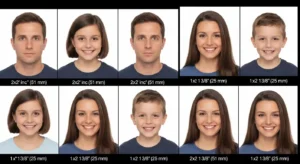
Complete DS-160 form online through the U.S. Department of State Consular Electronic Application Center portal. DS-160 form collects personal information, travel history, employment background, and security disclosures. Accurate data entry ensures alignment with approved USCIS petition. Petition alignment prevents discrepancies during consular review. Upload digital photograph meeting U.S. visa photo specifications. Submit confirmation page after electronic signature. Confirmation page generates barcode required for interview scheduling. Data accuracy reduces administrative processing delays at the U.S. Embassy in Islamabad or Consulate in Karachi.
Pay Visa Fee
Pay visa fee according to selected USA work visa classification before scheduling interview. Standard Machine Readable Visa fee equals $185 for most non-immigrant categories. Fraud prevention fee equals $500 for H-1B and L-1 classifications. Additional reciprocity fees apply depending on bilateral agreements. Payment generates receipt number required for appointment booking. Receipt confirmation verifies financial compliance with U.S. consular procedures. Fee payment finalizes application activation within the embassy scheduling system in Pakistan.
Schedule Biometrics
Schedule biometrics appointment at a designated Visa Application Center in Pakistan after fee payment. Biometrics appointment requires fingerprint capture and digital photograph collection. Fingerprint data supports identity verification within U.S. security databases. Identity verification precedes visa interview eligibility. Appointment confirmation must match DS-160 barcode and passport number. Accurate scheduling ensures procedural continuity. Procedural compliance accelerates security clearance checks before interview at the U.S. Embassy in Islamabad or Consulate in Karachi.
Attend Visa Interview
Attend visa interview at the U.S. Embassy in Islamabad or the U.S. Consulate in Karachi on scheduled date. Interview evaluates employment intent, qualification authenticity, and non-immigrant compliance where applicable. Consular officer reviews petition approval, DS-160 data, and supporting documentation. Documentation must include passport, I-797 notice, employment contract, educational credentials. Clear and consistent responses strengthen credibility. Credibility assessment influences visa decision under Section 214(b) or relevant statutory provisions.
Receive Visa Decision
Receive visa decision after consular adjudication concludes eligibility review under U.S. immigration law. Approved applications result in passport return with visa stamp indicating category and validity period. Validity period determines authorized entry window into the United States. Refused applications receive written notice citing statutory grounds. Administrative processing may delay final outcome for additional background checks. Final decision defines travel authorization status for Pakistani citizens seeking employment in the United States.
What are the Requirements for USA work visa for Pakistani Citizens?
USA work visa for Pakistani citizens requires 8 verified elements:
- Valid passport: Minimum 6-month validity beyond intended stay.
- Approved USCIS petition: Form I-797 notice.
- Employment contract: Specifies salary, duties, work location.
- Educational degree: Bachelor’s or higher if required by category.
- Work experience letters: Confirms skill relevance.
- Police clearance certificate: Confirms admissibility.
- Medical exam report: Required for immigrant categories.
- Visa fee receipt: Confirms payment.
Each requirement validates identity. Identity verification supports admissibility under U.S. immigration law.
How long does USA work visa processing take for Pakistani citizens?
USA work visa processing time for Pakistani citizens ranges from 15 days to 24 months, depending on visa type.
- H-1B premium processing: 15 days
- H-1B regular processing: 2-4 months
- L-1 processing: 1-4 months
- O-1 processing: 2-3 months
- EB-3 processing including PERM: 12-24 months
Processing time varies based on USCIS workload and administrative review at the U.S. Embassy in Pakistan.
What are the costs of USA work visa for Pakistani citizens?
USA work visa for Pakistani citizens involves 5 main cost components:
- USCIS filing fee: $460 (Form I -129 base fee)
- Fraud prevention fee: $500 (H-1B, L-1)
- ACWIA training fee: $750 – $1,500 (H-1B employers)
- Premium processing fee: $2,500 (optional)
- Visa application fee: $185
Total employer cost for H-1B ranges from $3,395 to $6,460 depending on company size and premium selection. Cost structure influences employer sponsorship decisions.
What is the complete Medical test list for USA work visa?
The medical examination for a USA work visa is generally required for employment-based immigrant visas and must be conducted by a U.S. embassy-approved panel physician. The test typically includes a full physical examination, medical history review, chest X-ray to screen for tuberculosis, blood tests for syphilis, and vaccination record verification according to CDC guidelines. Applicants may also undergo screening for communicable diseases of public health significance and mental health conditions associated with harmful behavior. Required vaccinations include MMR, polio, tetanus-diphtheria, influenza, varicella, and COVID-19 where applicable. Results are submitted directly to the embassy or provided in a sealed envelope.
How much is a Bank Statement for USA Work Visa from Pakistan?
For a USA work visa, bank statement requirements vary by category. For employer-sponsored nonimmigrant visas such as H-1B, L-1, and O-1, there is no fixed minimum balance required, since the U.S. employer files a Labor Condition Application confirming salary; however, applicants should maintain at least three to six months of personal bank statements showing consistent transactions and a closing balance of approximately USD 5,000 -10,000 to cover travel and initial settlement costs. For immigrant employment visas such as EB-2 and EB-3, six months of statements are advisable, ideally reflecting stable funds of USD 8,000 – 15,000, although primary financial responsibility rests with the sponsoring employer.
What are the main reasons for USA work visa refusal?
USA work visa refusal for Pakistani citizens occurs under 6 measurable factors:
- Failure to prove temporary intent under Section 214(b)
- Inconsistent interview responses
- Incomplete supporting documents
- Weak employer compliance record
- Immigration violation history
- Security or background concerns
How can Go Foreign USA Work Visa Consultants help you?
Go Foreign USA Work Visa Consultants provide end-to-end legal guidance for USA work visa through eligibility assessment, petition preparation, and interview strategy. Go Foreign USA Work Visa Experts in islamabad evaluate qualifications, select the correct visa category, prepare compliant documentation, and strengthen approval probability at USCIS and at the U.S. Embassy in Pakistan.
For a consultation and detailed assessment of your USA work visa eligibility, contact us directly at: 03330478050
Can Pakistani citizens bring family under USA work visa?
Yes. Pakistani citizens can bring immediate family members under dependent classifications:
- H-1B → H-4
- L-1 → L-2
- O-1 → O-3
- E-2 → E-2 dependent
- EB-2 / EB-3 → Derivative immigrant visas
Dependent status permits residence in the United States during principal visa validity.
Which USA work visa for Pakistani citizens leads to permanent residence fastest?
It depends on job qualification level and employer sponsorship capacity.
- EB-2 visa:Faster priority dates for advanced degree professionals.
- EB-3 visa: Suitable for skilled workers with employer sponsorship.
- H-1B to EB-2 transition: Dual intent allows status adjustment after PERM approval.
Permanent residence timeline depends on labor certification approval and visa bulletin priority date.